The Pisces represents 25 years of board design evolution from Lost. It's a compact board with a slightly longer wheelbase than you'd expect for its size, which gives it a unique feel — quick and responsive through turns, but with enough stability to carry speed smoothly between them. The wider deck adds solid leverage for confident carving.
It's the kind of board that feels quick underfoot without being twitchy — always ready for whatever line you see next. The design reflects Lost's unmistakable progressive identity: bold, modern, and rooted in surf culture.
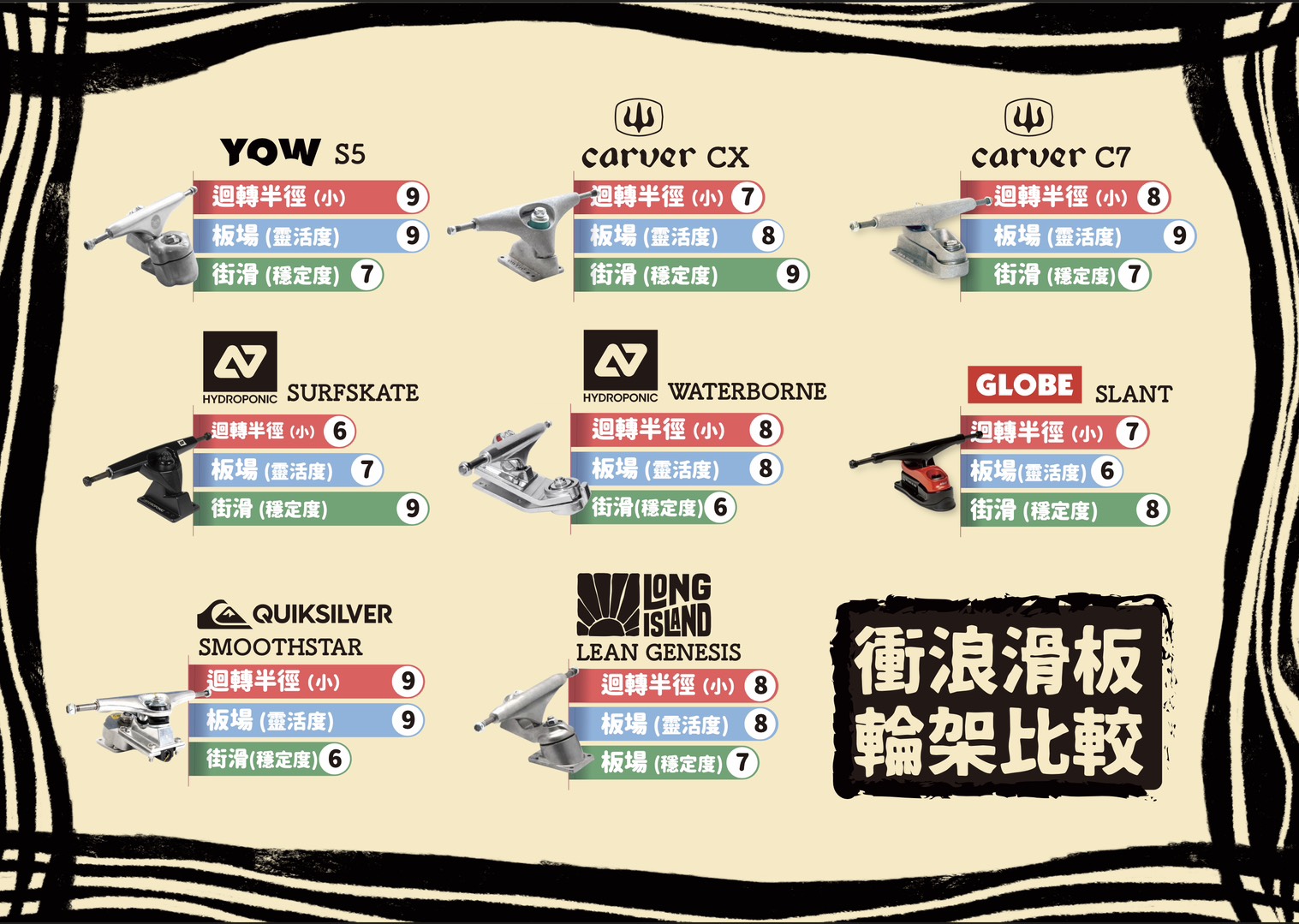
Available with CX for snappier rail engagement or C7 for that smooth, drawn-out surf feeling.
You'll Love This If…
-
You want a compact board that generates speed efficiently.
-
You enjoy quick, responsive carving without sacrificing control.
-
You appreciate progressive surfboard-inspired design.
-
Length : 29″ / 73.7 cm
-
Width : 10.5″ / 26.7 cm
-
Wheelbase : 15.875″ / 40.3 cm
-
Deck: …Lost 29″ Pisces
-
Trucks: Carver CX
-
Bushings: Carver CX Standard (Smoke, 87a)
-
Wheels: Roundhouse Slicks (65mm, 83a Green Glo)
-
Bearings: Carver ABEC 7 Built-In
-
Risers: Carver 3/16″ gasket x 2 (3/8″ total)
-
Hardware: Carver countersunk (1.25″)

HISTORY OF CARVER SKATEBOARDS
It all started one quiet summer in Venice, California in 1995. Greg Falk and Neil Carver had been surfing all winter, and were pumped to surf the warmer waters of the Breakwater during the long days of summer, but it was as flat as a puddle. Not even a longboard ripple to justify getting wet. So, like the many generations before them, they took to the streets with skateboards in search of hills to surf.
The historic neighborhoods of Venice and Santa Monica are a veritable skatepark of steep alleys and banks, and as they dropped in on those asphalt waves they were struck with how unlike surfing it was. Sure, they sort of got a surf-like experience, as much as standing on a board and banking turns can provide, but they really missed the snap and drive that a surfboard has, that crisp pivot you get at the tail that lets you really pump a wave for speed. Their skateboards felt stiff by comparison. They tried loosening the trucks even more but all they got was speed wobble, and the steepest hills became virtually unskateable.
And even with those loose trucks, the dynamic of the turn was still all rail-to-rail, symmetrical nose-to-tail. Picking up the nose to tic-tac at high speed down a steep incline was sketchy, so they were left only imagining the performance they wanted, unable to get that feel with any skateboard on the market.